Culture

Culture

Folk theatre that runs all night, buffalo races, spirit worship and many languages in a few hundred kilometres.

Photo: Vandana bhat kaustubha / CC BY-SA 4.0

Drive an hour in any direction here and the language, the food, the gods and even the shape of the roofs change. The coast is Tulu Nadu, home of spirit worship, buffalo races and all night theatre. The hills belong to coffee planters, areca farmers, forest communities and the proud Kodavas of Coorg. Pilgrims, traders and kings have passed through for two thousand years and each left something behind.

6+languages you can hear in a single day's drive
4Jnanpith winning writers who grew up in these hills and towns
Nov to Maythe season for Yakshagana, Kambala and temple fairs
YakshaganaPhoto: Sahana M S / CC BY-SA 4.0

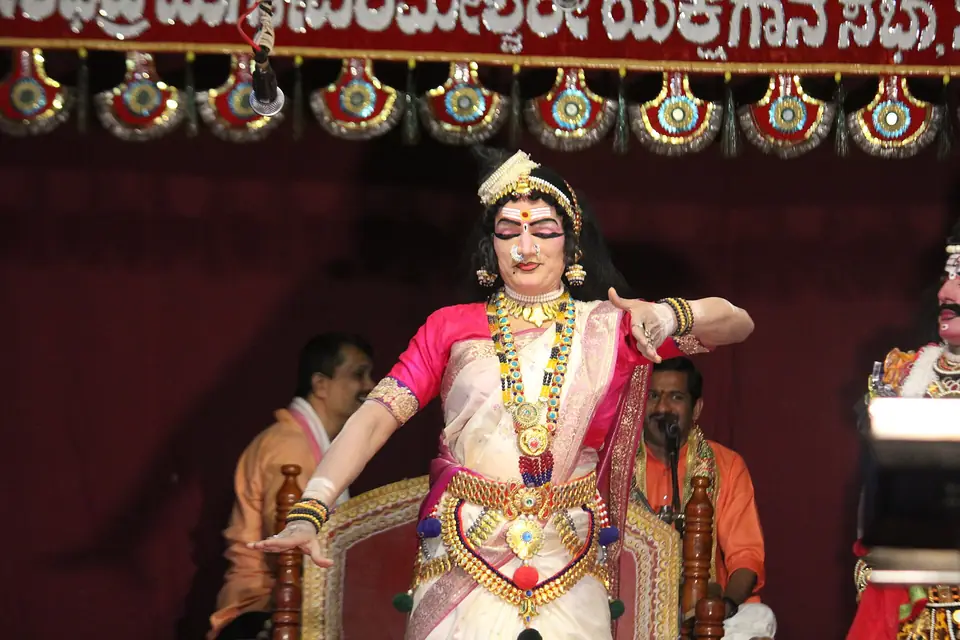
Yakshagana

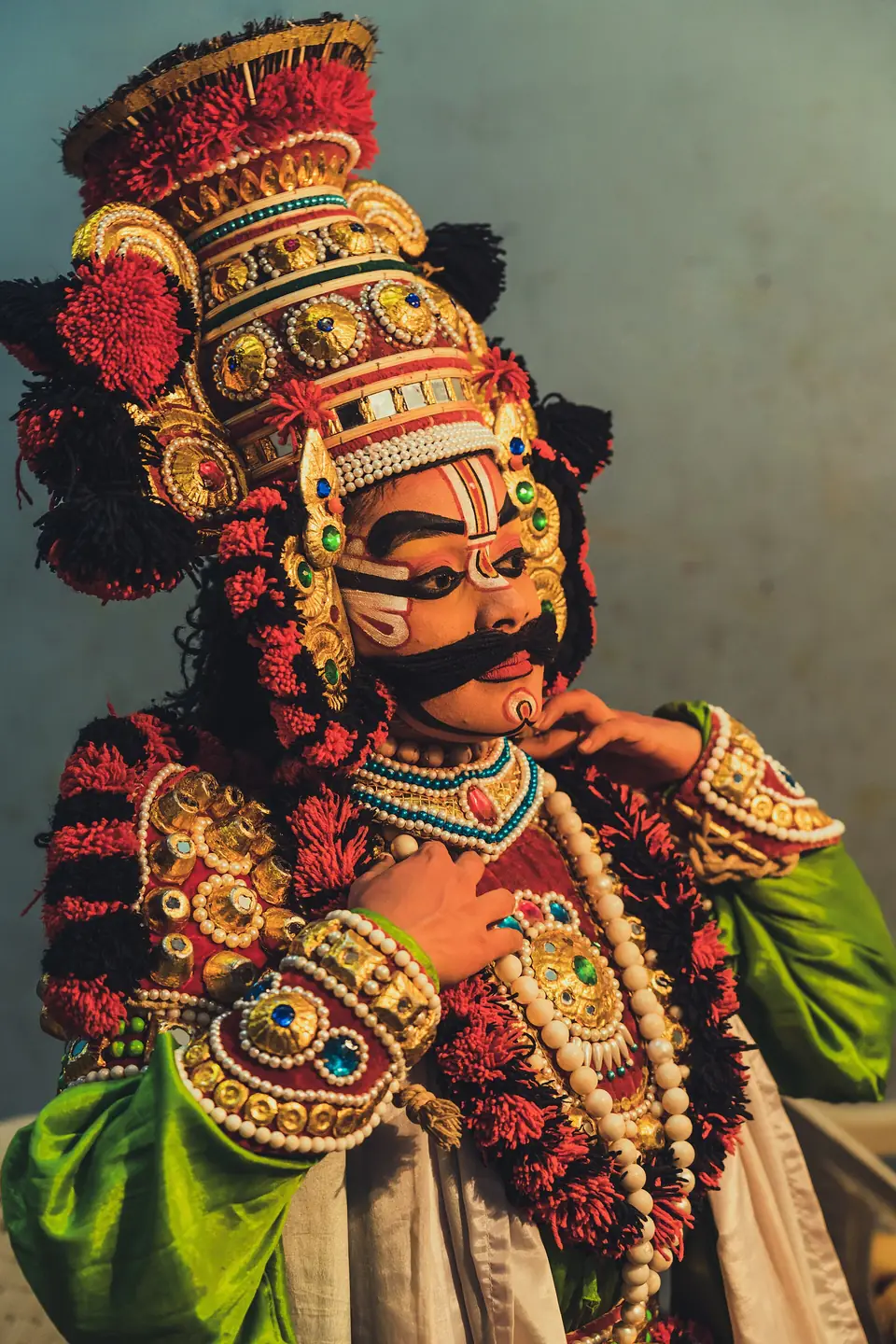
Yakshagana is the great folk theatre of the coast. Troupes perform stories from the Ramayana, Mahabharata and the Puranas through the night with dance, songs, improvised dialogue and a live band of chande drums and maddale. The costumes and huge headgear are spectacular.

Good to know. The touring season is roughly November to May. Look out for posters in town or ask at your hotel.
KambalaPhoto: Anoop Kumar / CC BY 2.0

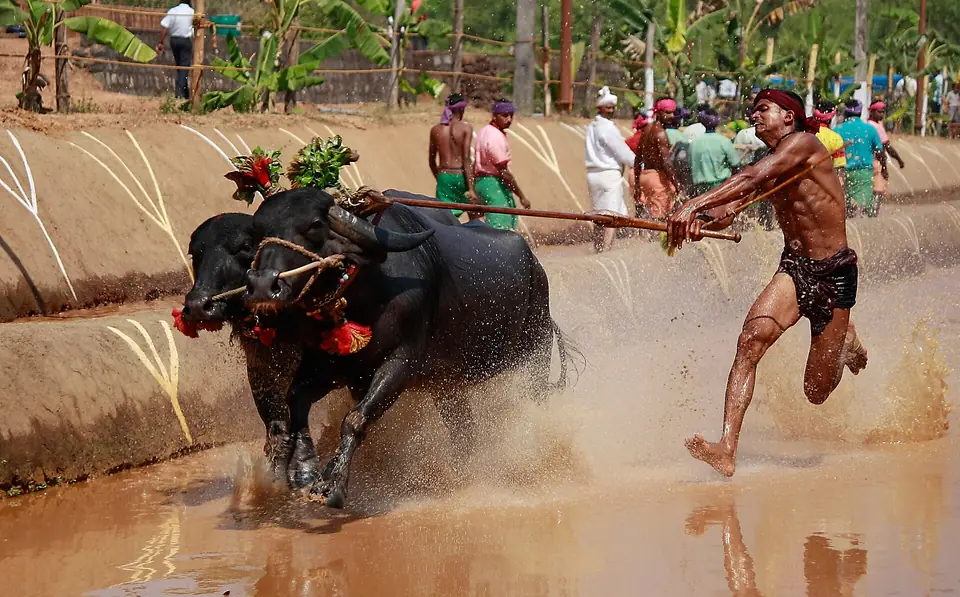
Kambala

In the winter months pairs of buffaloes race through slushy paddy fields while their handlers run behind them, splashing mud everywhere. Kambala is a centuries old farming tradition of Tulu Nadu and a big community event.

Good to know. The season runs from about November to April with races on most weekends.
Bhuta KolaPhoto: BHARATHESHA ALASANDEMAJALU / CC BY-SA 4.0

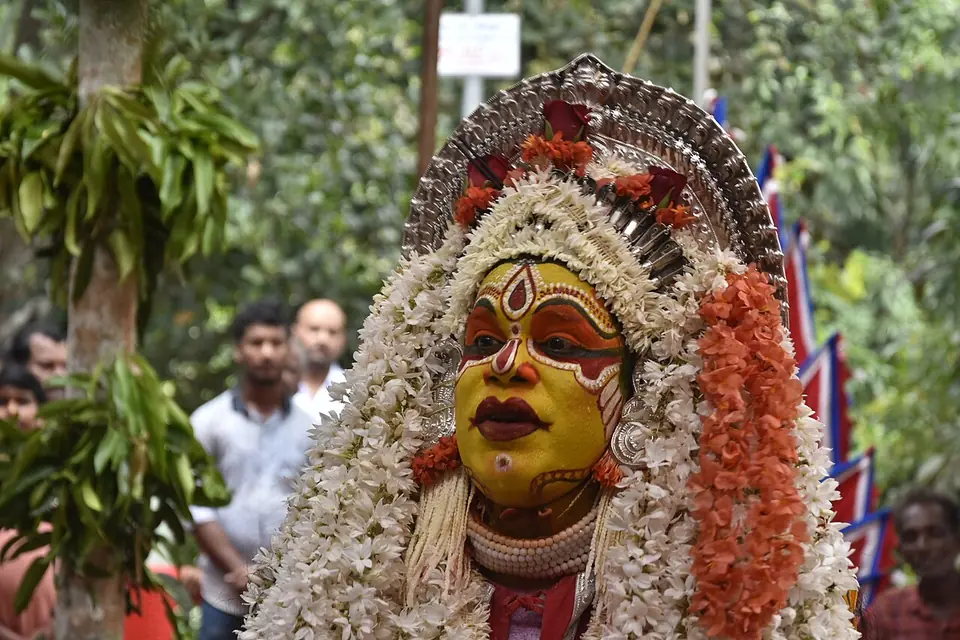
Bhuta Kola

A ritual worship of local spirit deities called daivas, performed through the night by trained artists in elaborate makeup and costumes made of areca fronds. For people in Tulu Nadu it is a sacred family and village ritual, not a show.

Good to know. Attend only if invited or welcomed. Ask before taking photos and dress modestly.
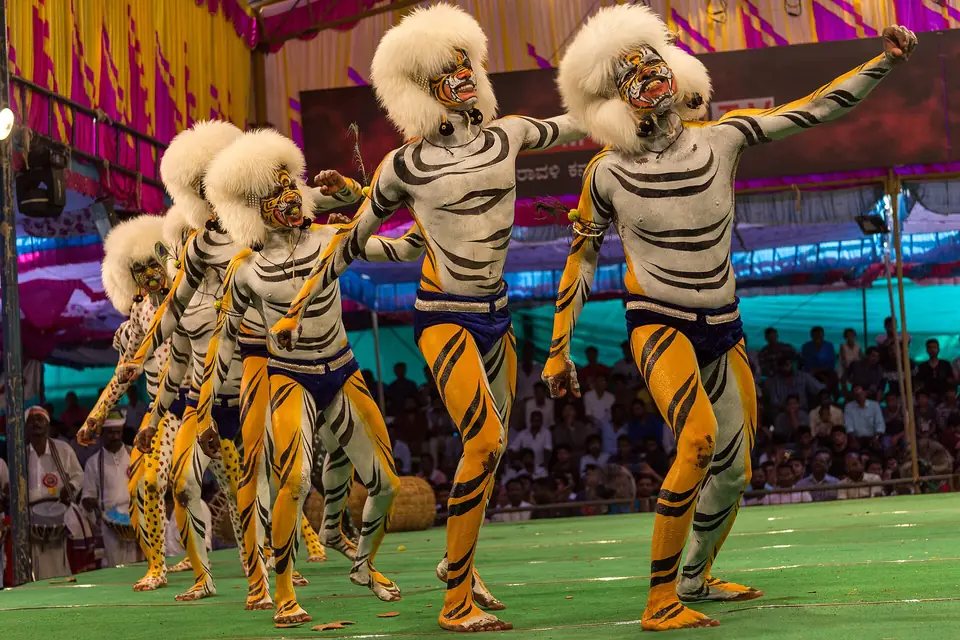
Pili VeshaPhoto: Fana2012 / CC BY-SA 4.0

Pili Vesha

Tiger dancers painted in stripes from head to toe dance through the streets to the beat of drums during Dasara in Mangaluru and Krishna Janmashtami in Udupi. The energy is wild.

Living traditions

Drums, dances and rituals

Beyond Yakshagana and Kambala, every community here has its own way of marking the seasons.

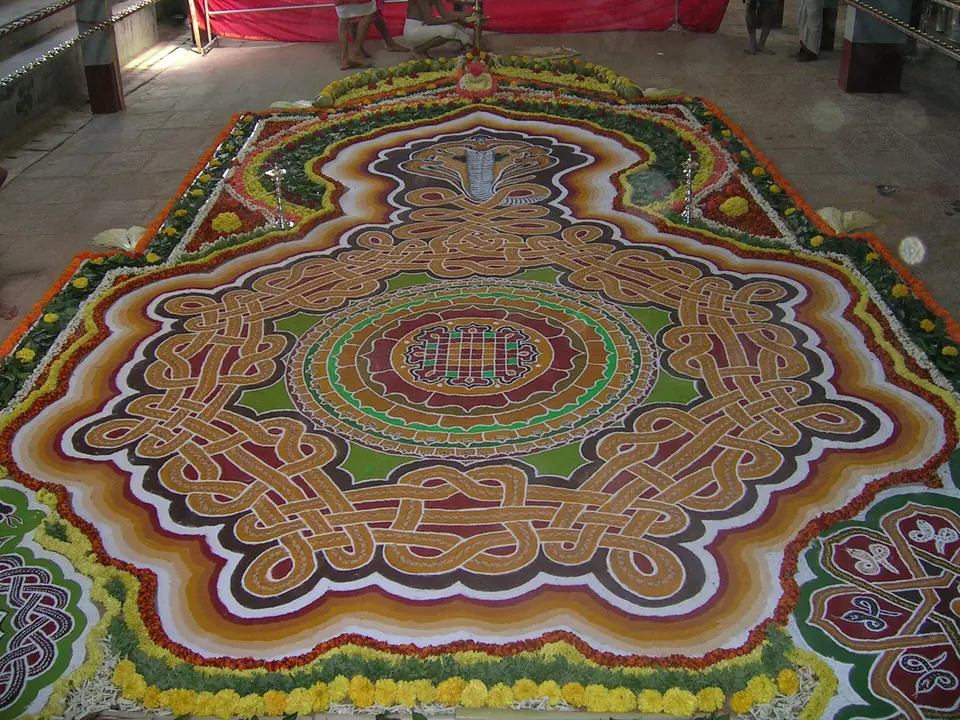
A Nagamandala drawn in coloured powders for a night of serpent worshipPhoto: Quantumquark / CC BY 3.0

Nagaradhane and Nagamandala

Serpent worship runs deep in Tulu Nadu. Most old family lands still have a naga bana, a small grove with stone cobras. For a Nagamandala, priests draw a huge serpent in coloured powders and dance around it through the night while drums play.

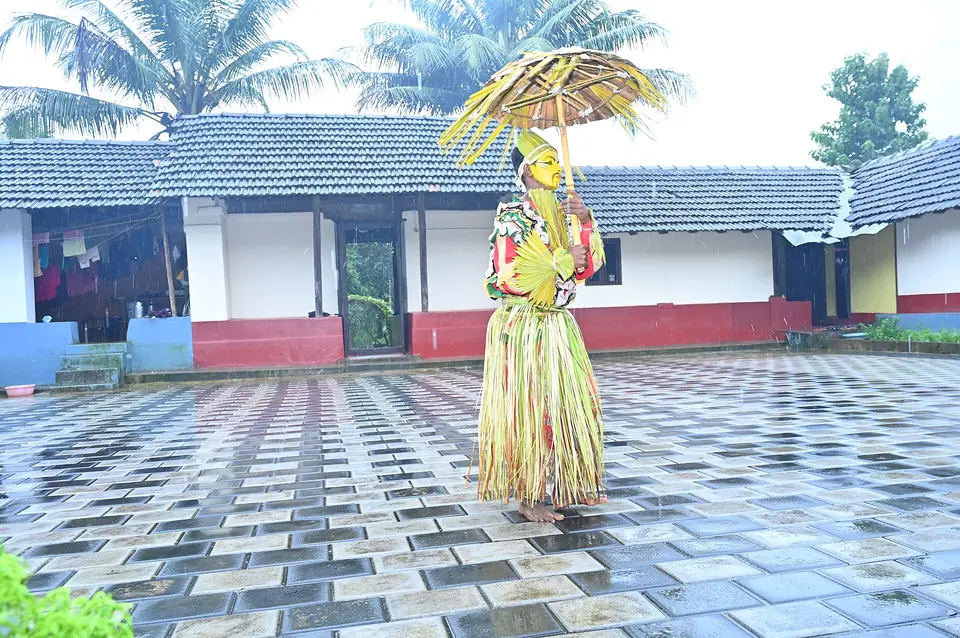
An Aati Kalenja performer in a costume of tender palm leavesPhoto: BHARATHESHA ALASANDEMAJALU / CC BY-SA 4.0

Aati Kalenja

In Aati, the wettest month of the monsoon, a performer dressed in tender palm leaves goes from house to house to drive away illness and bad luck. Families also drink a bitter bark kashaya on Aati Amavasya to stay healthy through the rains.

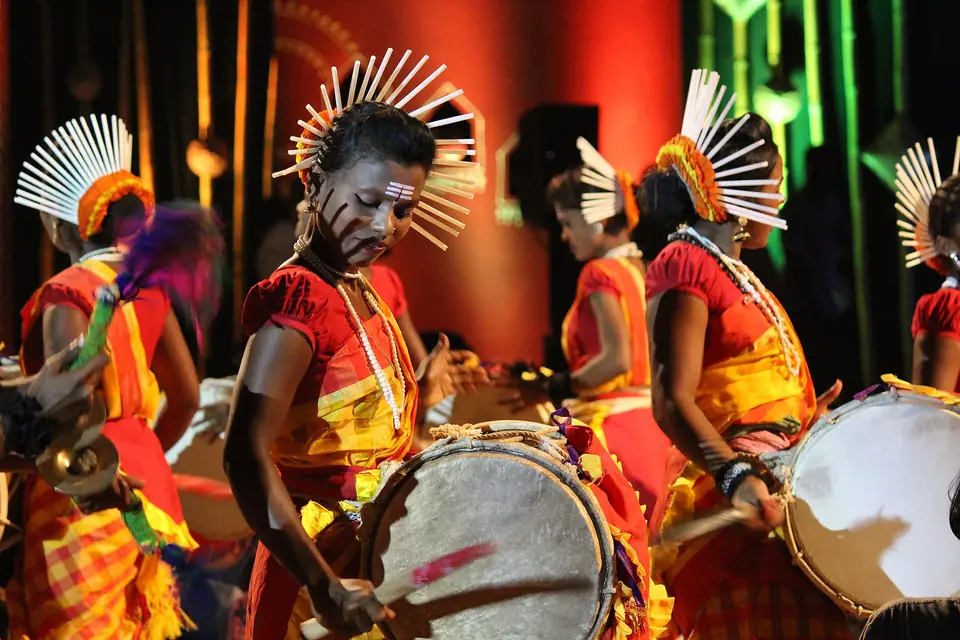
Dollu Kunitha drummers in performancePhoto: Navaneeth Krishnan S / CC BY-SA 4.0

Dollu Kunitha

A thundering drum dance from the Malenadu villages. Dancers swing big drums around their necks and leap in tight formations. Once you hear it, you feel it in your chest.

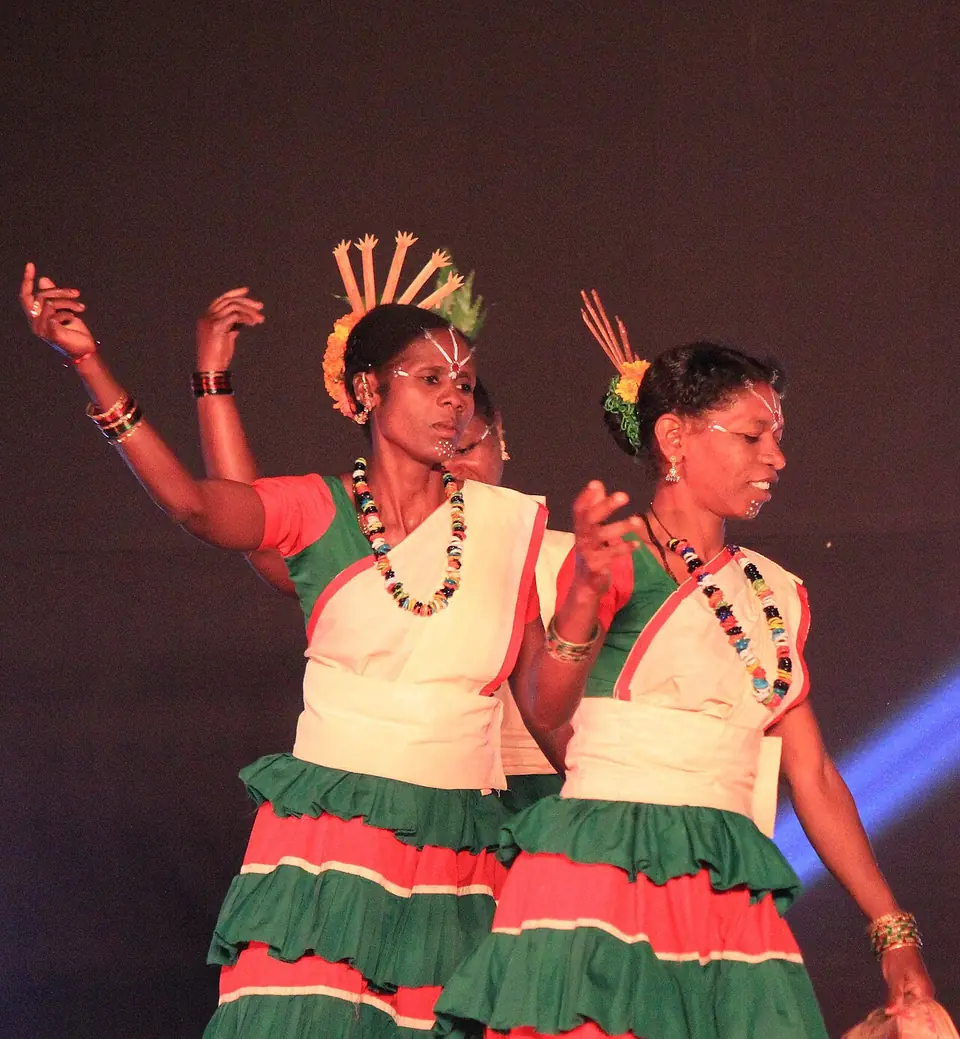
Siddi dancers from Uttara KannadaPhoto: Sumita Roy Dutta / CC BY-SA 4.0

Siddi Damami

The Siddis of the forests around Yellapur, Haliyal and Ankola are descended from Africans who came to India centuries ago. Their Damami dance, played on a single drum, is joyful and fast.

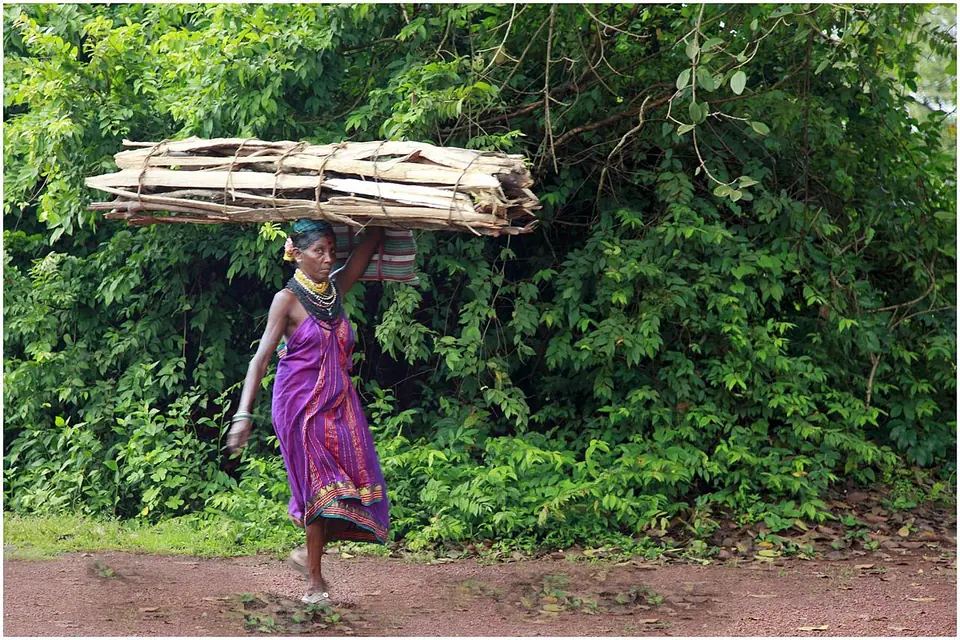
A Halakki woman carrying firewood home from the forestPhoto: Ramnath Bhat / CC BY 2.0

Halakki songs

Halakki Vokkaliga women around Ankola, Kumta and Honnavar are known for their beaded necklaces and their songs about farm work, forests and the gods. Two of them, the singer Sukri Bommagowda and the tree planter Tulasi Gowda, received the Padma Shri.

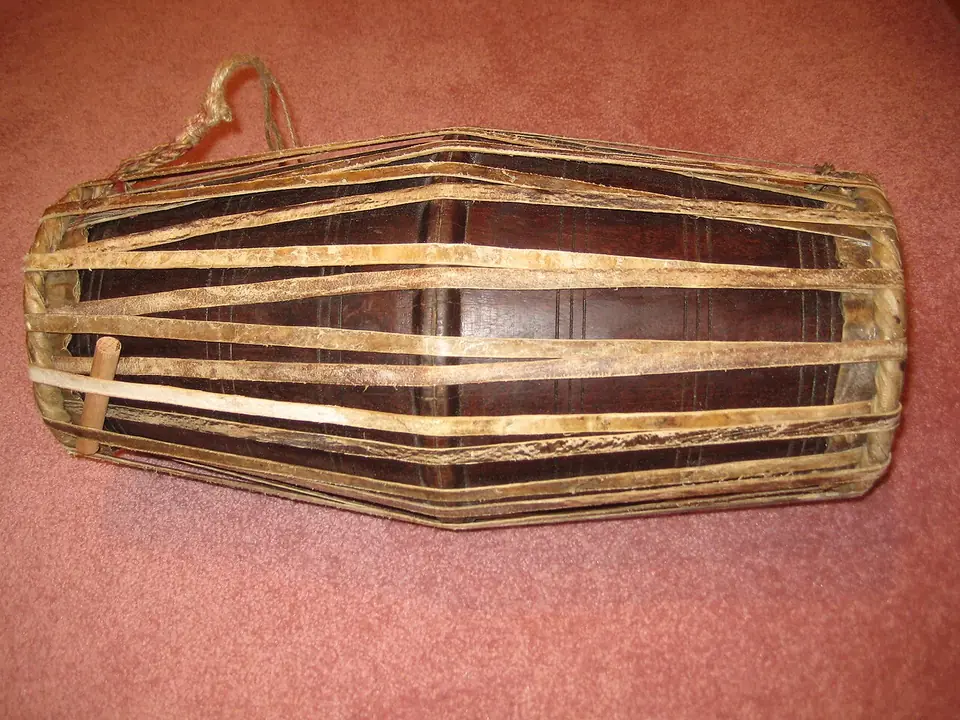
The maddale, the drum that keeps time in Talamaddale and YakshaganaPhoto: Raguks / CC BY-SA 3.0

Talamaddale

Yakshagana without costumes or dance. Artists sit in a circle and argue out the epics in sharp, witty Kannada, backed by the same chande and maddale drums. Locals love it as a battle of wits.

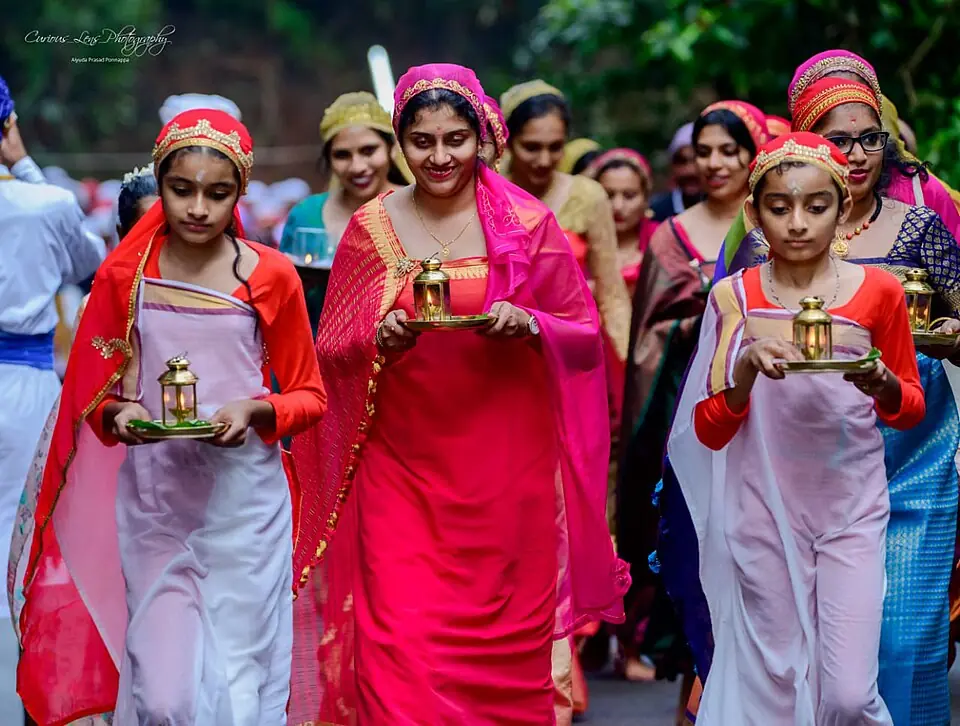
Kodava women in their pleated sareesPhoto: Nanaiahbottolanda / CC BY-SA 4.0

Kodava dance and dress

At weddings and festivals Kodava men wear the black kupya chele with a silver dagger at the waist. Women wear their sarees pleated at the back. Look out for the Ummathat and Bolakaat dances during Kailpodh and Puthari.

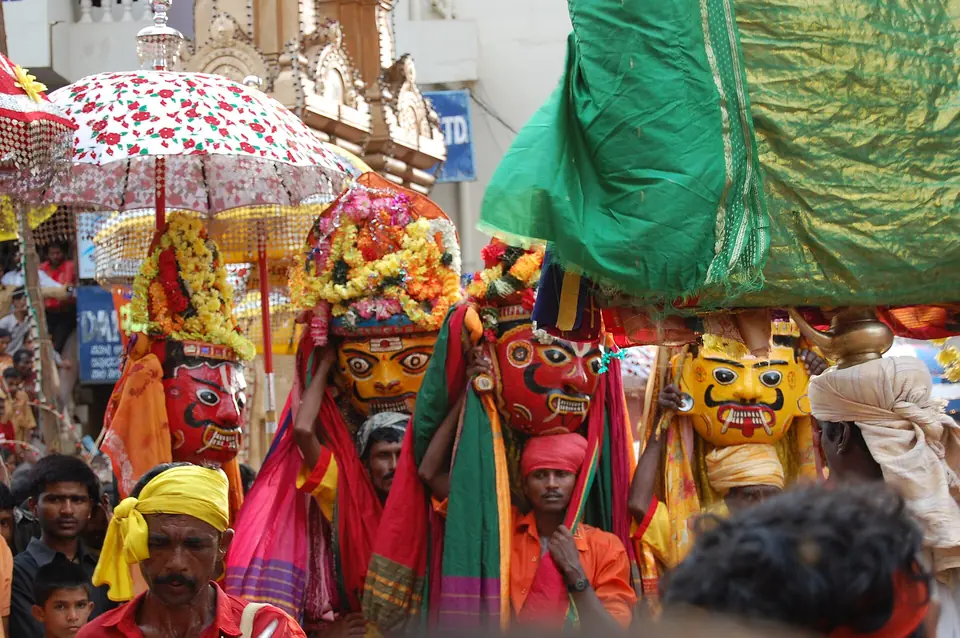
Tableaux and masks at the Mangaluru Dasara processionPhoto: Kiran Vati K / CC BY-SA 4.0

Mangaluru Dasara

For ten nights the Kudroli temple and the streets of Mangaluru light up. The festival ends with a huge procession of tableaux, bands and Pili Vesha tiger dancers that goes on past midnight.

Faith

Many faiths, side by side

Temples, mathas, basadis, churches, mosques and sacred groves, often a short walk apart.

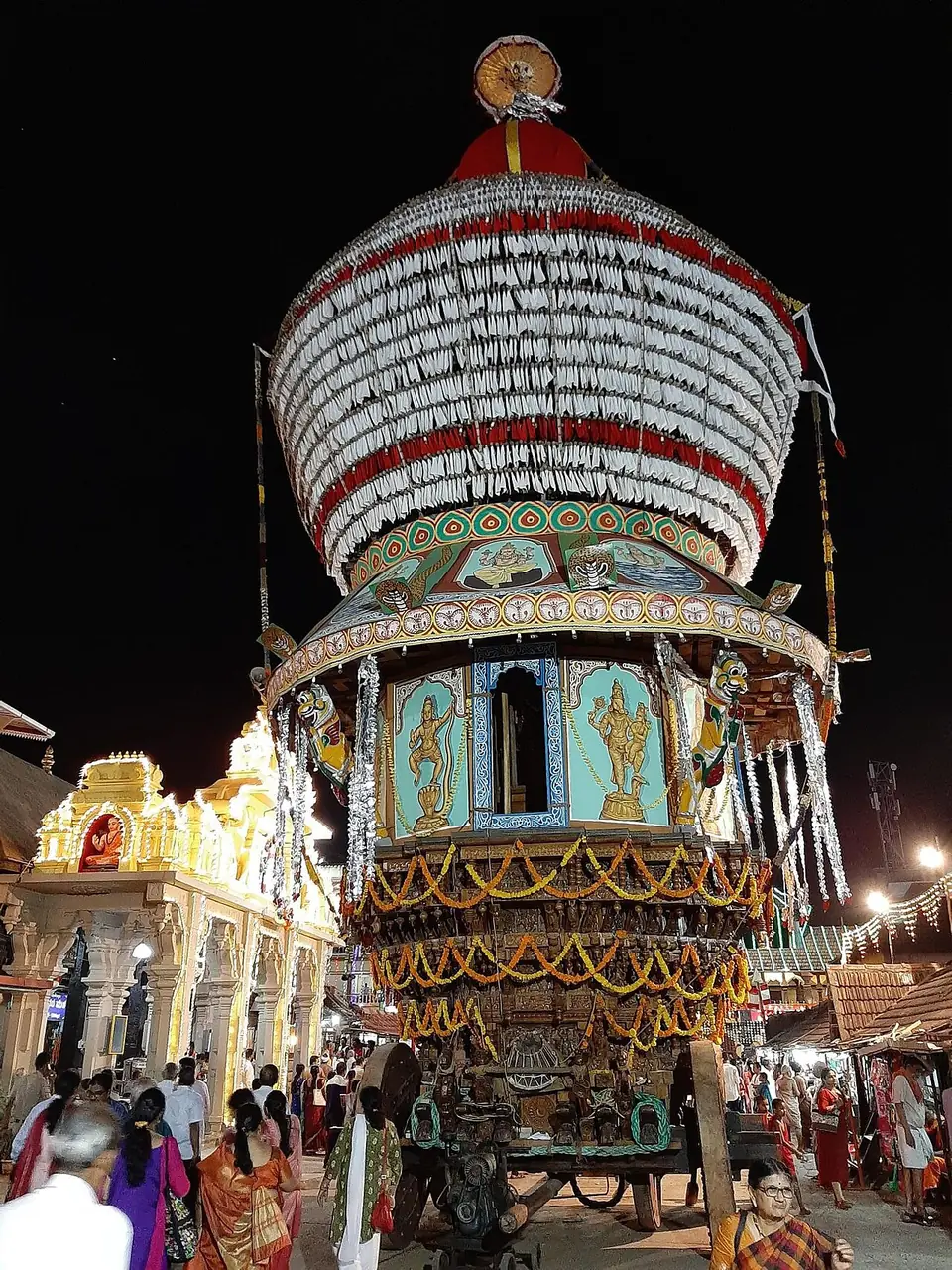
The temple car of Sri Krishna Matha during Paryaya in UdupiPhoto: Shibu Parambil Varghese / CC BY-SA 4.0

Krishna Matha and the eight mathas

Udupi's Krishna temple is run in turn by eight monasteries founded by the philosopher Madhvacharya. Every two years the charge passes from one swamiji to the next in the Paryaya festival, with a grand procession before dawn.

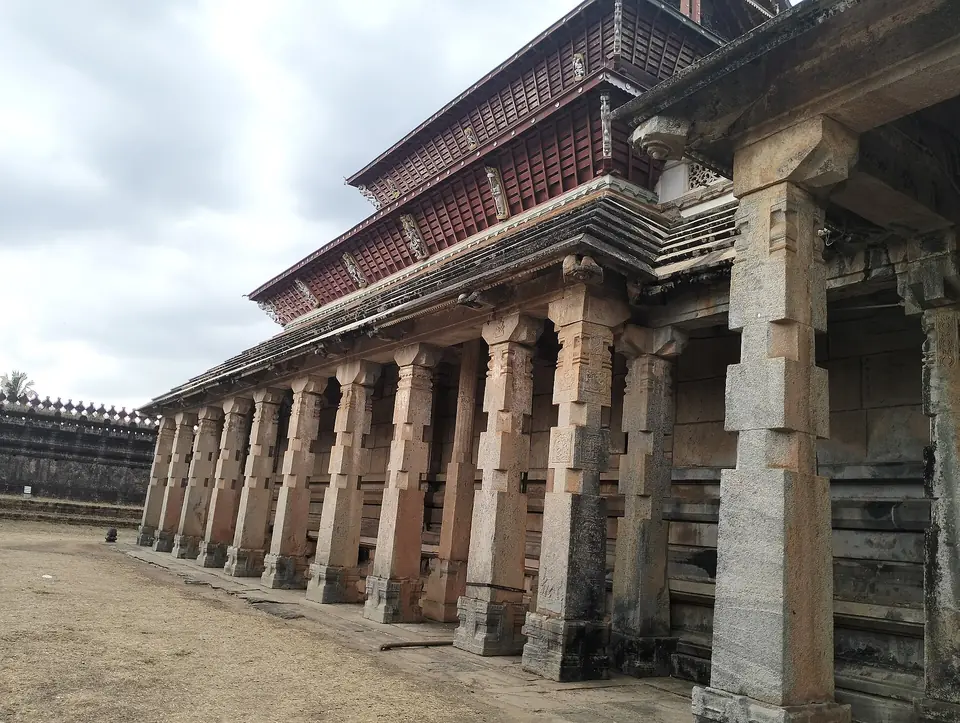
The pillared hall of Saavira Kambada Basadi, MoodbidriPhoto: आर्या जोशी / CC BY-SA 4.0

Jain heritage

Moodbidri has 18 basadis, including the Saavira Kambada Basadi with its thousand carved pillars. Karkala and Venur have giant Bahubali statues and Gerusoppa near Honnavar has a four faced stone temple in the forest.

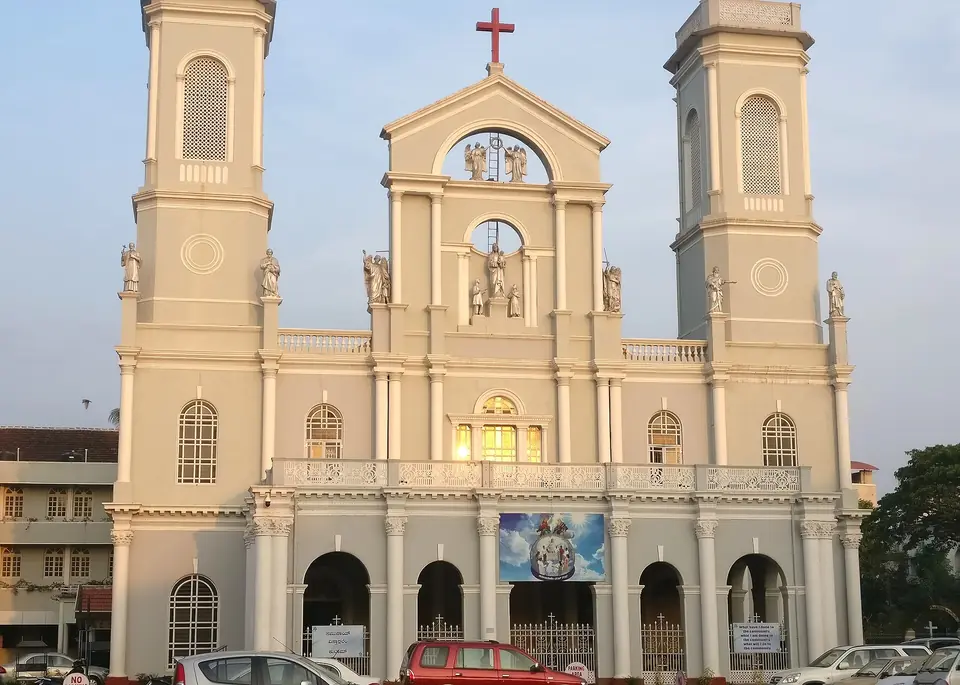
Milagres Church, MangaluruPhoto: Robjersey / CC BY-SA 4.0

Churches of the coast

Konkani speaking Catholics have lived on this coast for centuries. Their churches, from Milagres and Rosario in Mangaluru to the basilica at Attur, are busy with feasts, novenas and the Monti Fest harvest blessing in September.

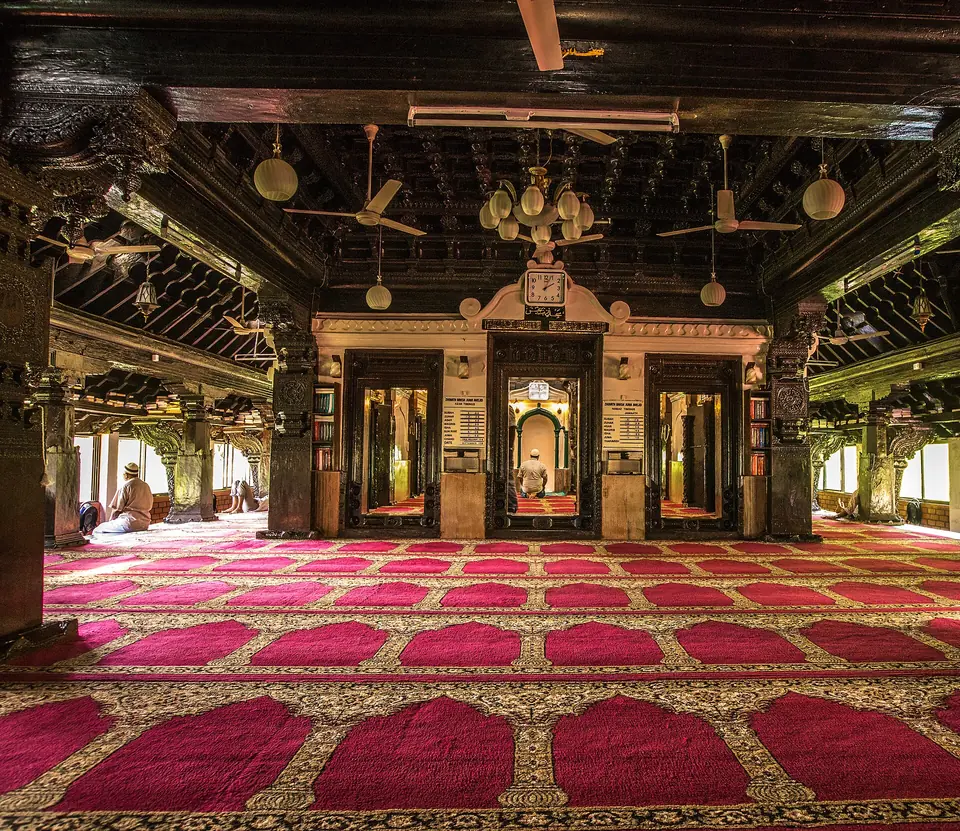
Zeenath Baksh Masjid, Dakshina KannadaPhoto: Krishna Mohan / CC BY-SA 4.0

Mosques and dargahs

Arab traders came to this coast long before the Europeans. The Zeenath Baksh mosque in Mangaluru has old carved wooden pillars and the Ullal dargah holds a big Uroos festival every five years.

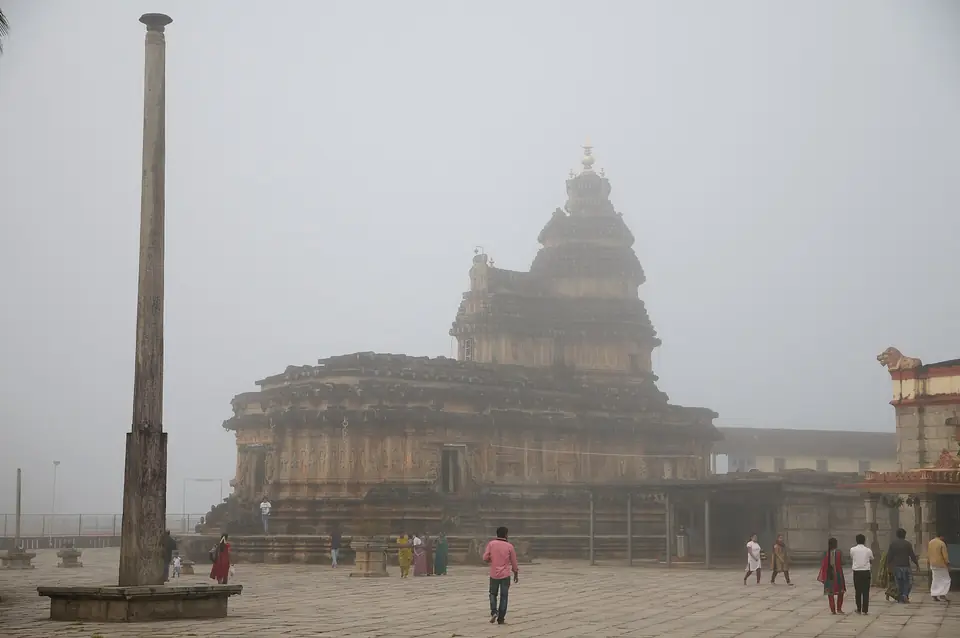
Vidyashankara temple at Sringeri on a foggy dayPhoto: Vikas149r / CC BY-SA 3.0

Sringeri

A peaceful temple town on the Tunga river and one of the four mathas set up by Adi Shankaracharya. Pilgrims come for the Sharada temple and the carved Vidyashankara temple.

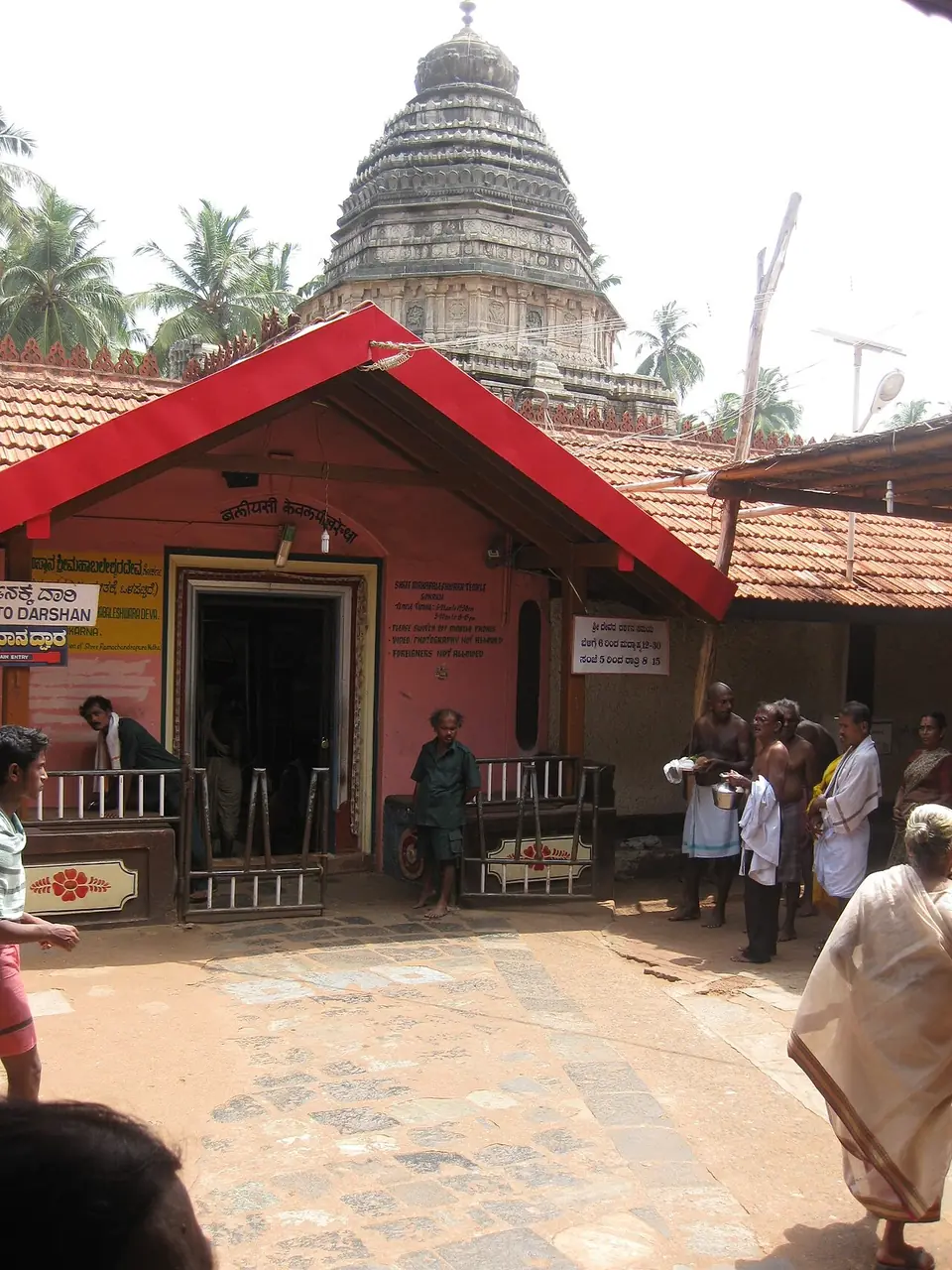
Mahabaleshwar Temple, Gokarna, Uttara KannadaPhoto: Nvvchar / CC BY-SA 3.0

Gokarna

Long before the beaches became famous, Gokarna was among the holiest Shiva towns in South India. The Mahabaleshwar temple fills up for Shivaratri and pilgrims bathe in the sea first.

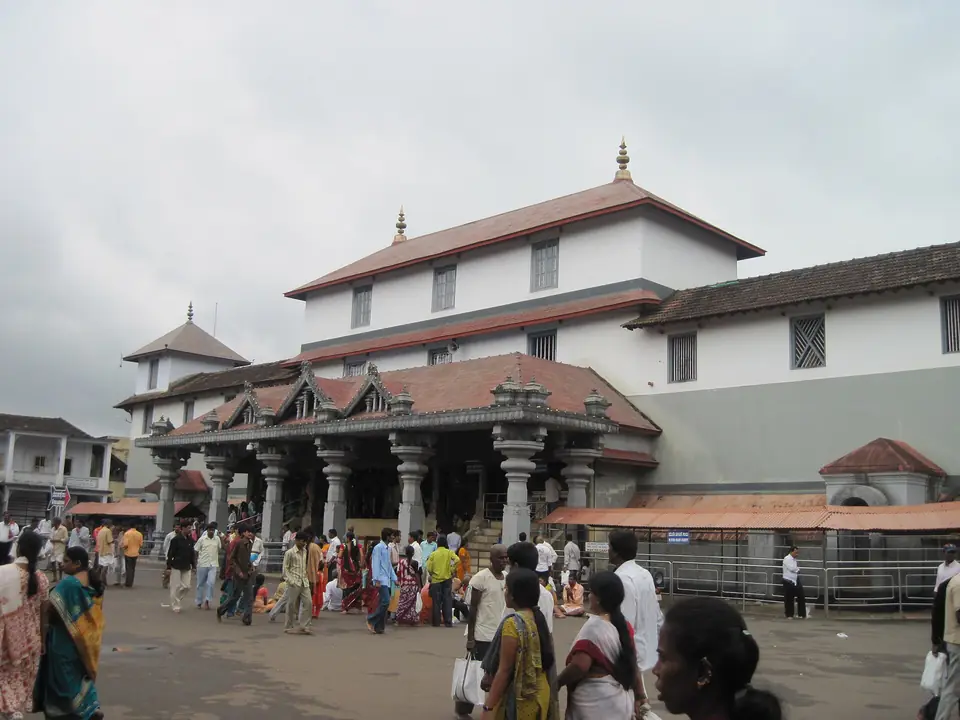
Manjunatha temple, DharmasthalaPhoto: Vedamurthy J / CC BY-SA 3.0

Dharmasthala

The Manjunatha temple here is a Shiva temple served by Vaishnava priests and looked after by a Jain family. Its kitchens feed thousands of pilgrims for free every day.

Forest along the Kali river near DandeliPhoto: Alosh Bennett from Hyderabad, India / CC BY 2.0

Sacred groves

Across Kodagu and the coast, patches of forest are set aside for local gods and never cut. These devarakadu and naga banas protect old trees, springs and wildlife. Walk in quietly and leave everything as it is.

Languages

Say it in Tulu

Most people switch between two or three languages in a day. English and Hindi work in towns, but a word of the local language goes a long way.

Kannada
Everywhere. The state language, with its own coastal flavours such as Kundagannada around Kundapura and Havyaka Kannada in the areca hills of Sirsi and Sagara.
Tulu
Mangaluru, Udupi and the Tulu Nadu countryside. The everyday language of Bhuta Kola, Kambala and home.
Konkani
Catholic and Saraswat families along the coast and in Karwar. Around Mangaluru it is written in Kannada script.
Beary
Muslim families of Dakshina Kannada, a language that mixes Tulu and Malayalam sounds.
Kodava takk
The Kodavas of Coorg. Arebhashe, another local language, is spoken around Sullia and parts of Kodagu.
Nawayathi and more
The Navayath community of Bhatkal speaks Nawayathi. Near the borders you will also hear Malayalam and Marathi.
Homes and temples

Built for the rain

Steep roofs, deep verandas and courtyards that catch the monsoon, alongside some of India's finest carved stone.

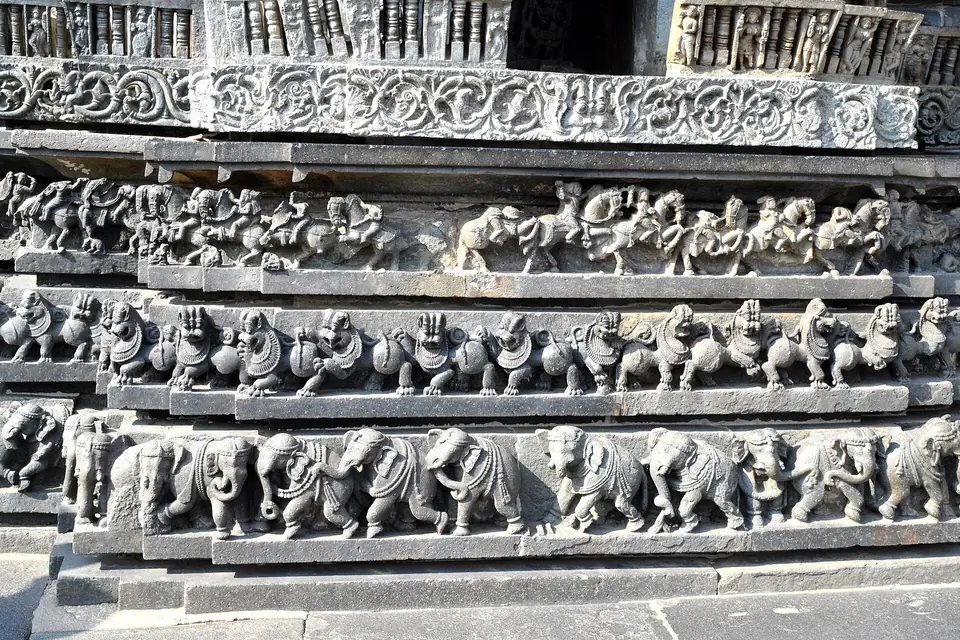
Carved frieze at BelurPhoto: Vasukrishnan57 / CC BY-SA 4.0

Hoysala temples

Soapstone carved like lace at Belur, Halebidu and dozens of village temples. Every dancer, elephant and god on the walls is different.

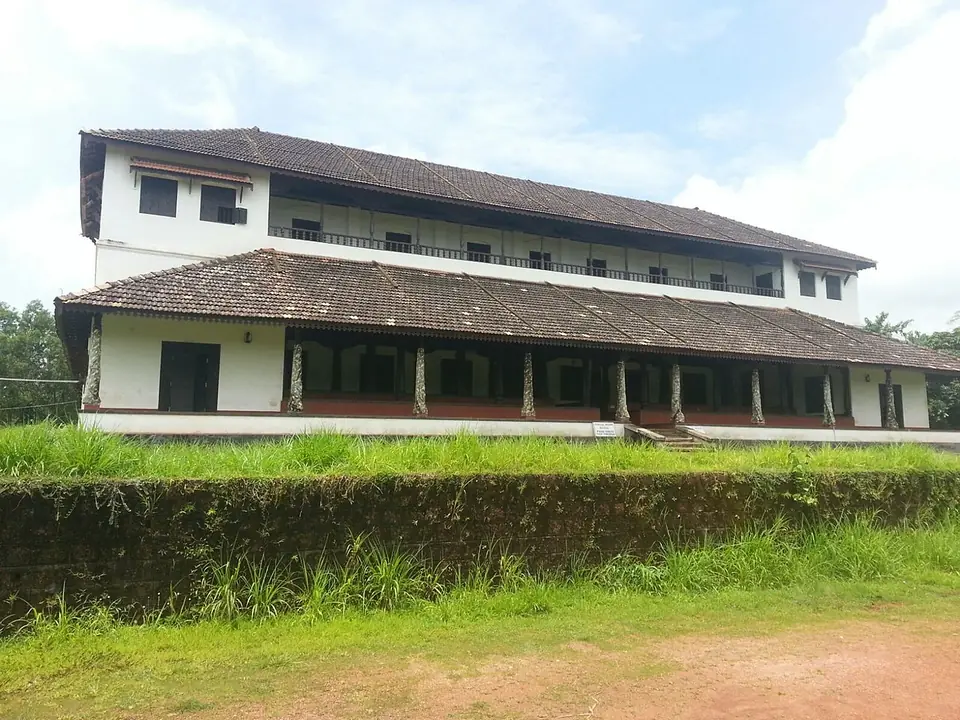
A traditional Guthu manor house in Tulu NaduPhoto: Pavanaja / CC BY-SA 4.0

Guthu houses

The old manor houses of Tulu Nadu's landowning families, with wooden pillars, an inner courtyard and a shrine for the family daiva.

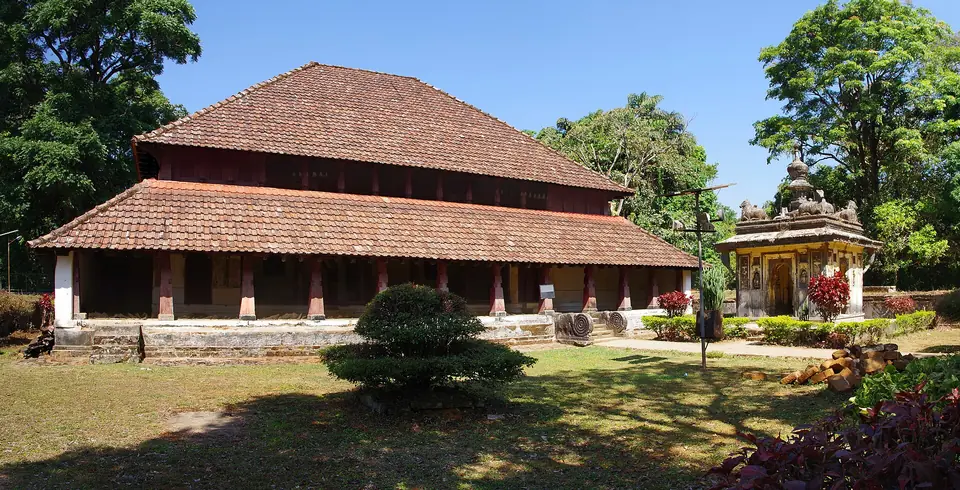
Nalknad Palace, KodaguPhoto: Phototraveller1 / CC BY-SA 4.0

Kodava homes and palaces

Kodava ainmanes are large ancestral homes shared by a whole clan. The Nalknad palace near Kakkabe shows the same style on a royal scale.

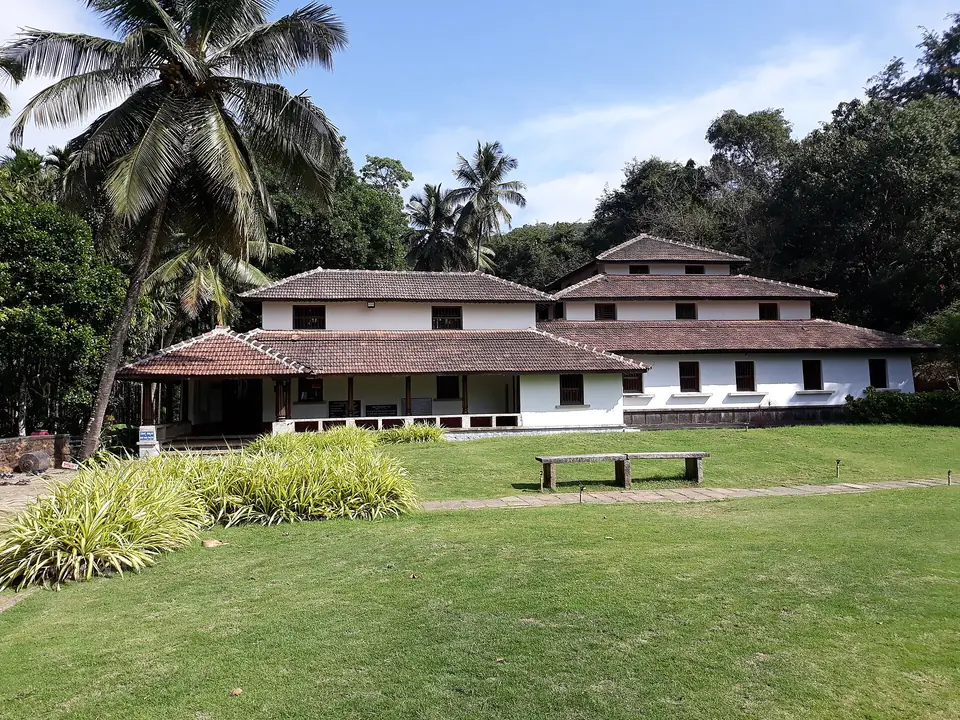
Kavimane, the poet Kuvempu's family home at KuppalliPhoto: Kiran Vati K / CC BY-SA 4.0

Malenadu homes

Long tiled roofs, deep verandas and a central courtyard to let the monsoon rain in. The poet Kuvempu's home at Kuppalli is a beautiful example.

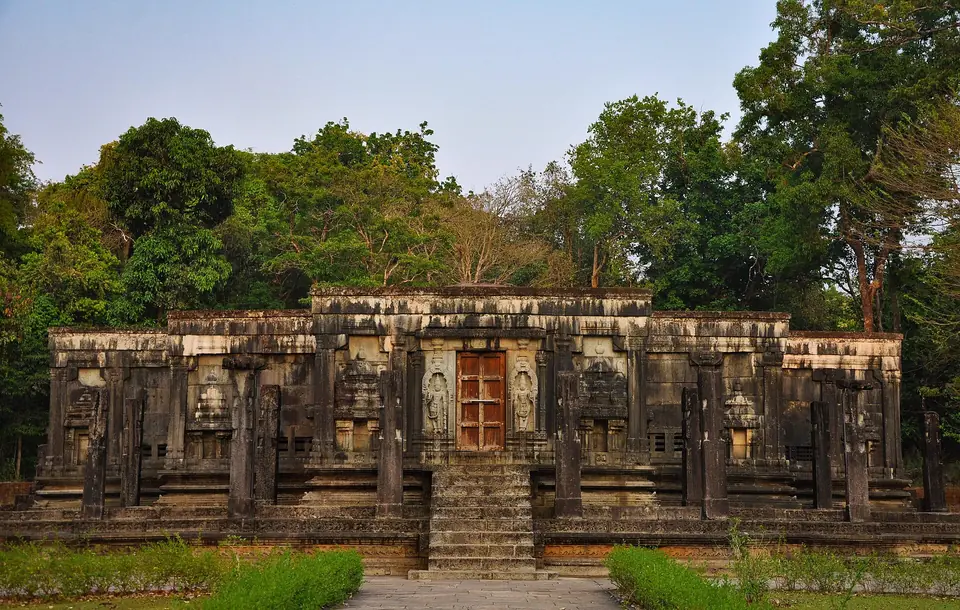
Chaturmukha Basadi at Gerusoppa, upriver from HonnavarPhoto: Vinay Hegde / CC BY-SA 4.0

Stone roofed basadis

Jain builders on the coast copied timber roofs in solid stone slabs to beat the rain. See them at Moodbidri, Karkala, Bhatkal and Gerusoppa.

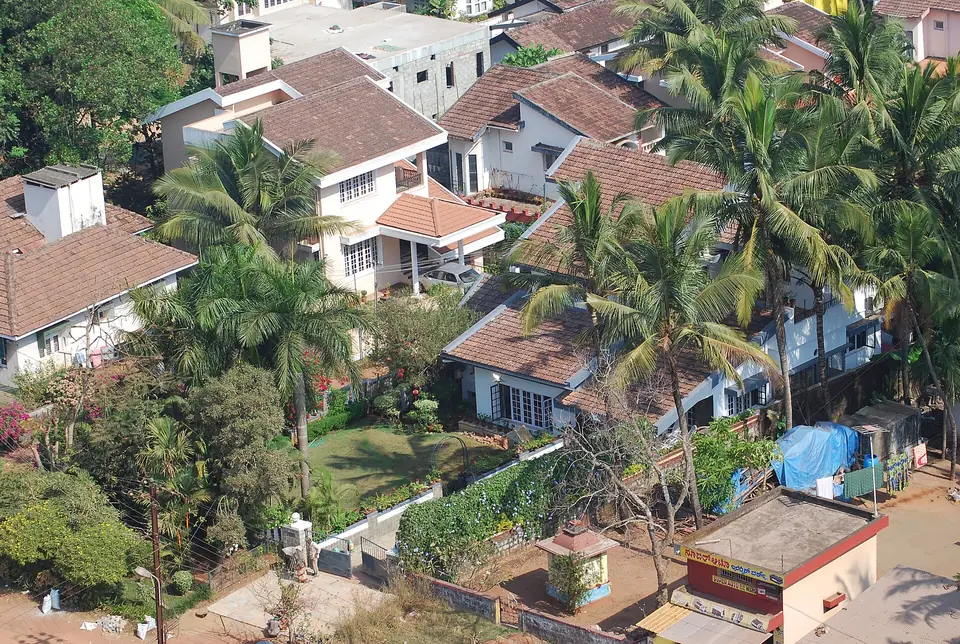
Red Mangalore tile roofsPhoto: Premkudva / CC BY-SA 3.0

Mangalore tiles

Red clay tiles made here since the 1860s. They spread across India and as far as East Africa and are still the signature roof of the coast.

Festival calendar

Something on, every season

Exact days follow the lunar calendar and change each year, so check locally before you plan around one.

January

  • Paryaya in Udupi (every two years)
  • Kambala races on most weekends
  • Makara Sankranti

February and March

  • Shivaratri at Gokarna and Dharmasthala
  • Marikamba fair in Sirsi (every two years)
  • Temple car festivals across the coast

April and May

  • Kodava family hockey festival
  • Village temple fairs
  • Last Kambala races

July and August

  • Aati traditions in Tulu Nadu
  • Nagara Panchami
  • Krishna Janmashtami and Vittal Pindi in Udupi

September

  • Kailpodh in Kodagu
  • Monti Fest in Catholic homes and churches
  • Ganesh Chaturthi

September and October

  • Mangaluru Dasara and Pili Vesha
  • Madikeri Dasara with its night procession
  • Kaveri Sankramana at Talakaveri

October and November

  • Deepavali
  • Hasanamba temple opens in Hassan
  • Yakshagana troupes begin touring

November and December

  • Lakshadeepotsava at Dharmasthala
  • Champa Shashti at Kukke Subramanya
  • Puthari harvest festival in Kodagu
  • Christmas on the coast
Made here

Things worth taking home

Buy from the people who grow and make them. Several of these carry a Geographical Indication tag.

Coffee

Coorg Arabica and Chikmagalur Arabica both carry a GI tag. Buy beans from estate shops and curing works in Chikkamagaluru, Sakleshpur and Madikeri.

Spices

Coorg green cardamom, Malenadu pepper and cinnamon. Kodagu honey and homemade wines are popular too.

Udupi sarees

Light cotton handloom sarees with a GI tag, woven by a small number of weaver societies around Udupi and Mangaluru. Lovely for hot weather.

Sandalwood and rosewood carving

The Gudigar carvers of Sagara and Sorab are famous for detailed carving in sandalwood and rosewood, from small figures to temple doors.

Stone sculpture

Karkala's carvers still make temple idols and pillars from local granite, as their families have done for generations.

Cashews and areca

Mangaluru is one of India's big cashew processing towns. Sirsi supari, the areca nut of the Sirsi hills, has its own GI tag.

Udupi Mattu Gulla

A round green brinjal grown only in Mattu village near Udupi. It even has a GI tag. Try it in a coastal sambar.

Areca leaf plates

Plates and bowls pressed from fallen areca leaf sheaths. Simple, plastic free and made in villages across the hills.

People

Writers, artists and legends

Some of India's best loved writers, artists and soldiers grew up in these towns and villages.

Kuvempu

Kannada's great poet grew up at Kuppalli near Thirthahalli. His family home is now a museum and Karnataka's state song is his.

K. Shivaram Karanth

Novelist, environmentalist and Yakshagana reformer from Kota near Udupi. He wrote about the coast and its people for over sixty years.

U. R. Ananthamurthy

Grew up in Melige near Thirthahalli. His novel Samskara, set in a Malenadu village, is a classic of Indian literature.

Girish Karnad

The playwright spent his childhood in Sirsi watching touring Yakshagana troupes. His play Naga Mandala draws on Kannada folk tales of snakes and spirits.

Poornachandra Tejaswi

Kuvempu's son farmed coffee near Mudigere and wrote funny, wild stories about Malenadu life, forests and birds.

Keremane Shivarama Hegde

Founded the Idagunji Mahaganapati Yakshagana Mandali at Gunavante near Honnavar. The troupe is now accredited by UNESCO for safeguarding living heritage.

Sukri Bommagowda and Tulasi Gowda

Halakki women from Ankola taluk. One kept thousands of folk songs alive, the other planted and tended tens of thousands of trees.

Cariappa and Thimayya

Field Marshal K. M. Cariappa and General K. S. Thimayya, two of India's best known soldiers, both came from Kodagu. The district's love of the army and of hockey runs deep.

A short history

Kings, pepper and coffee

Ancient kingdoms, a pepper queen who traded with the world and the first coffee in India. The story behind the temples and forts you will see.

  1. Around 345 CE

    The Kadamba kings rule from Banavasi, one of the earliest Kannada kingdoms.

  2. 8th to 14th centuries

    The Alupa kings rule Tulu Nadu from Mangaluru and later Barkur.

  3. 1117

    Hoysala king Vishnuvardhana starts the Chennakeshava temple at Belur.

  4. 13th century

    The philosopher Madhvacharya founds the Sri Krishna Matha in Udupi.

  5. 1432

    The great Bahubali monolith is raised on the rocky hill at Karkala.

  6. 1340s

    The traveller Ibn Battuta stays at Honnavar, then a busy port. He is struck by its many schools for girls and boys.

  7. 1498

    Vasco da Gama lands at St Mary's Islands on his way to Kozhikode.

  8. 16th century

    Rani Chennabhairadevi, the pepper queen, rules from Gerusoppa, upriver from Honnavar, trades pepper with the world and holds off the Portuguese.

  9. 1500s to 1763

    The Keladi Nayakas rule much of the hills and coast from Keladi, Ikkeri and Bidanur.

  10. 1600s

    Legend says the first coffee in India is planted on the slopes of Chandra Drona Parvatha.

  11. 1600s to 1834

    The Haleri kings rule Kodagu from Madikeri.

  12. 1760s to 1799

    Hyder Ali and Tipu Sultan build forts at Mangaluru, Jamalabad and Manjarabad.

  13. 1865

    The first Mangalore tile factory opens. Red clay tiles soon cover roofs across India and beyond.

  14. 1899

    Antonio Moscheni finishes the paintings inside St Aloysius Chapel in Mangaluru.

  15. 1956

    The coastal and hill districts join the new Mysore state, renamed Karnataka in 1973.

  16. 1998

    The Konkan Railway opens along the coast, linking Mangaluru to Goa and Mumbai.

  17. 2023

    The Hoysala temples of Belur, Halebidu and Somanathapura become a UNESCO World Heritage Site.

Be a good guest

Join in, respectfully

01

Rituals are not shows

Bhuta Kola, Nagamandala and Aati rituals are sacred to families. Watch from the side, ask before taking photos and never use a flash.

02

Dress for temples

Cover shoulders and knees. In some coastal temples men remove their shirts. Leave footwear outside.

03

Go to a Yakshagana

Shows often start late and run till dawn. Bring a shawl, buy a snack from the stalls and stay for at least a few hours.

04

Learn a few words

Namaskara works everywhere. Try 'encha ullar' (how are you) in Tulu and watch faces light up.

Time your trip to a festival

Kambala races, Yakshagana season, Paryaya in Udupi and Puthari in Kodagu. See what is on each month.

Month by month